RMSD
Tracks structural drift from a reference. A stable plateau is often reassuring; a continuing climb deserves inspection.
Trajectory analysis
PyMACS generates stability metrics, flexibility plots, compactness traces, contact maps, interaction summaries, ligand-centered network diagrams, and figurebooks.
Tracks structural drift from a reference. A stable plateau is often reassuring; a continuing climb deserves inspection.
Reports residue or atom flexibility. Peaks often indicate loops, termini, or contact regions that move substantially.
Measures compactness. It helps detect expansion, collapse, or large-scale breathing behavior.
Identifies residues near the ligand or partner over time, separating persistent interactions from brief encounters.
Output gallery
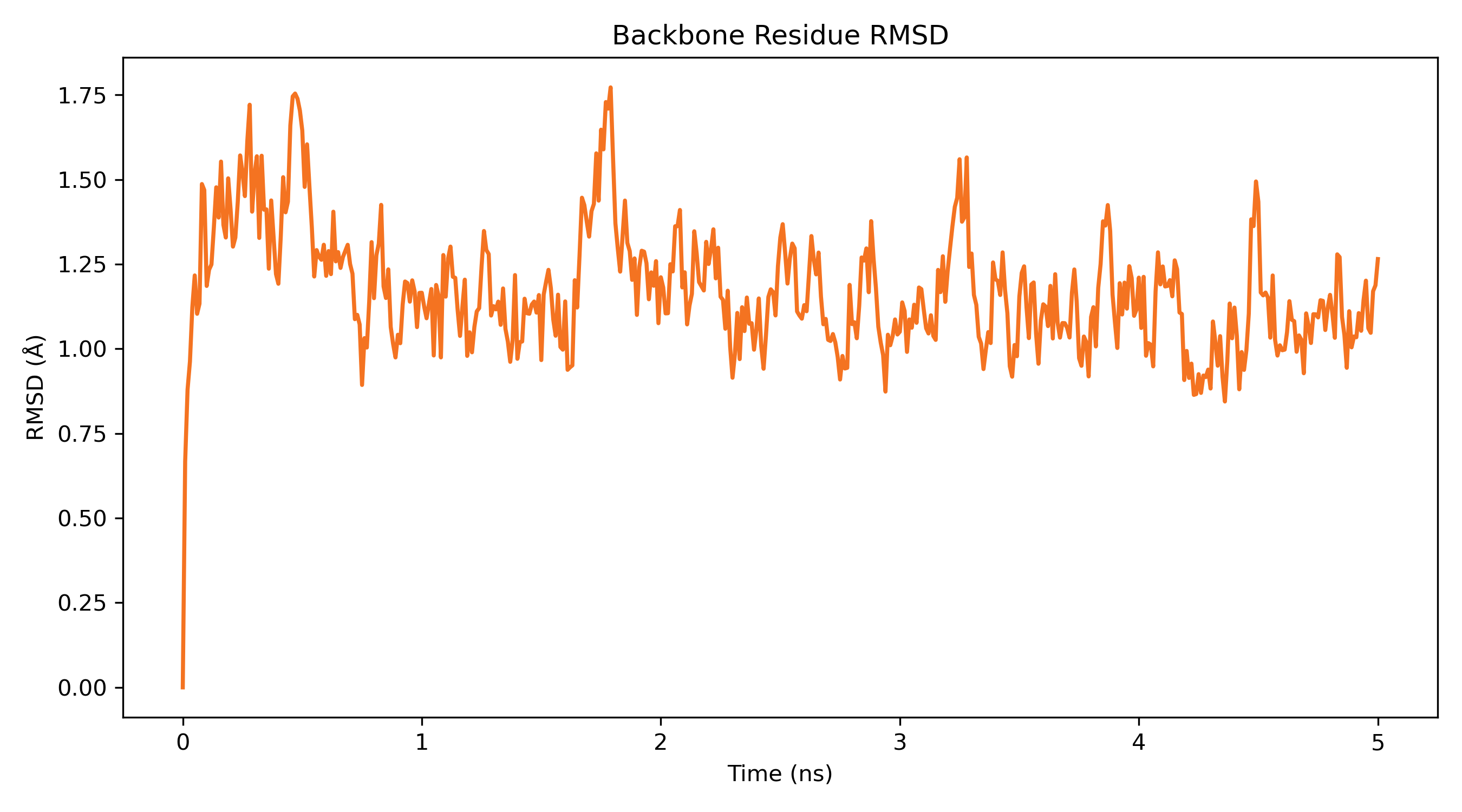
Tracks global backbone stability after alignment. A plateau usually suggests the protein has settled into a stable conformational regime.
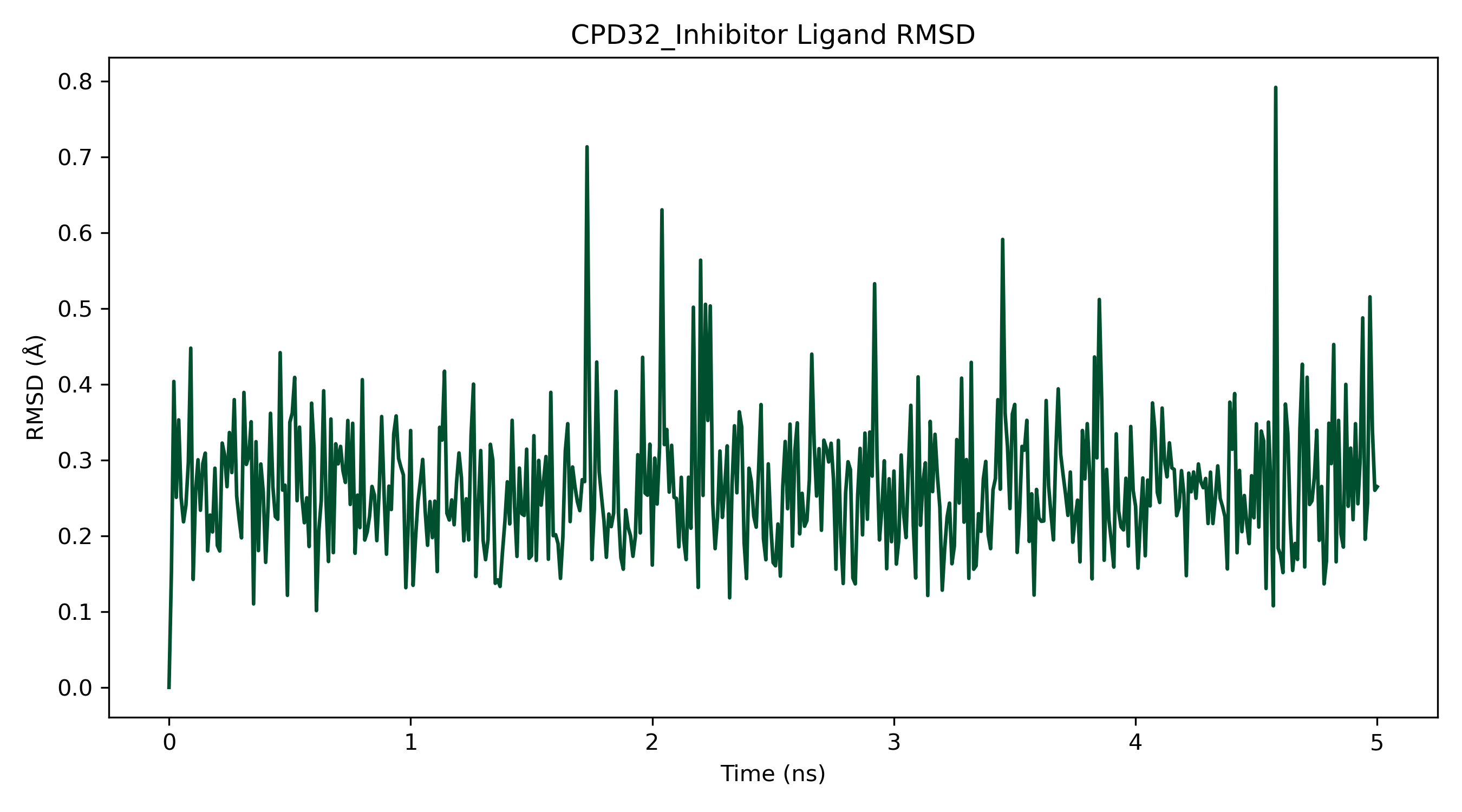
Shows whether the ligand preserves its starting binding pose, samples nearby sub-poses, or leaves the pocket.
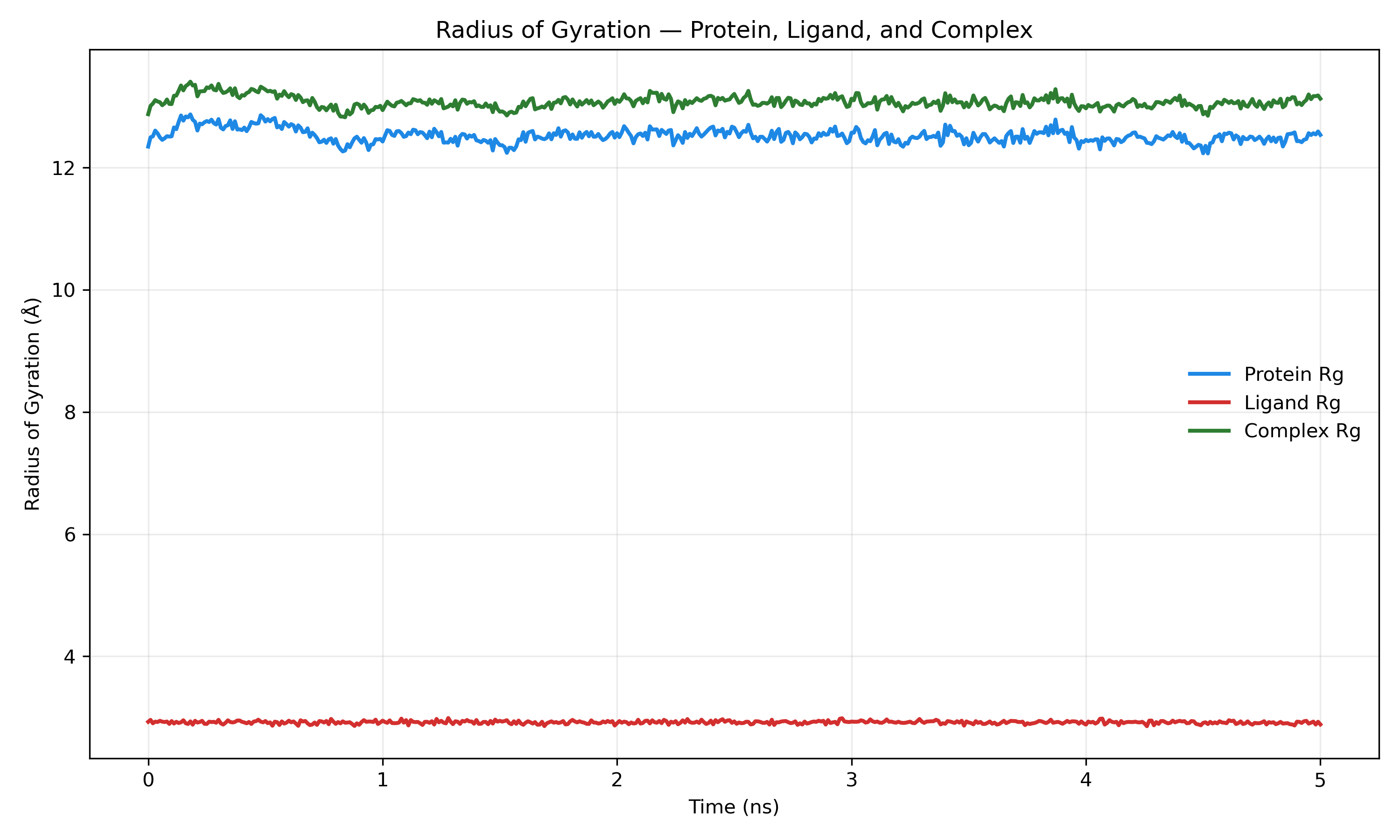
Measures compactness for the protein, ligand, and full complex as the trajectory evolves.
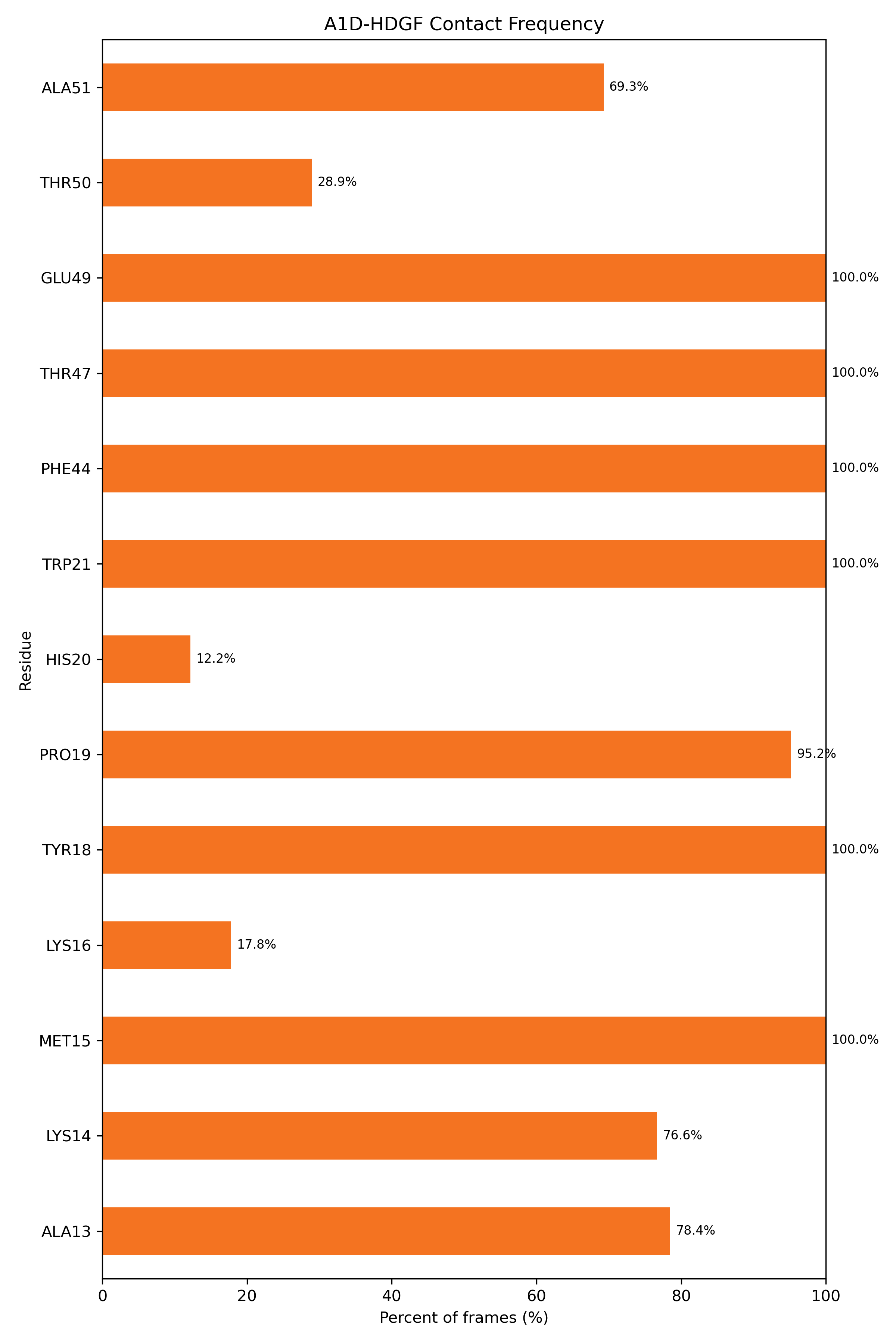
Ranks binding-pocket residues by how persistently they contact the ligand across the sampled trajectory.
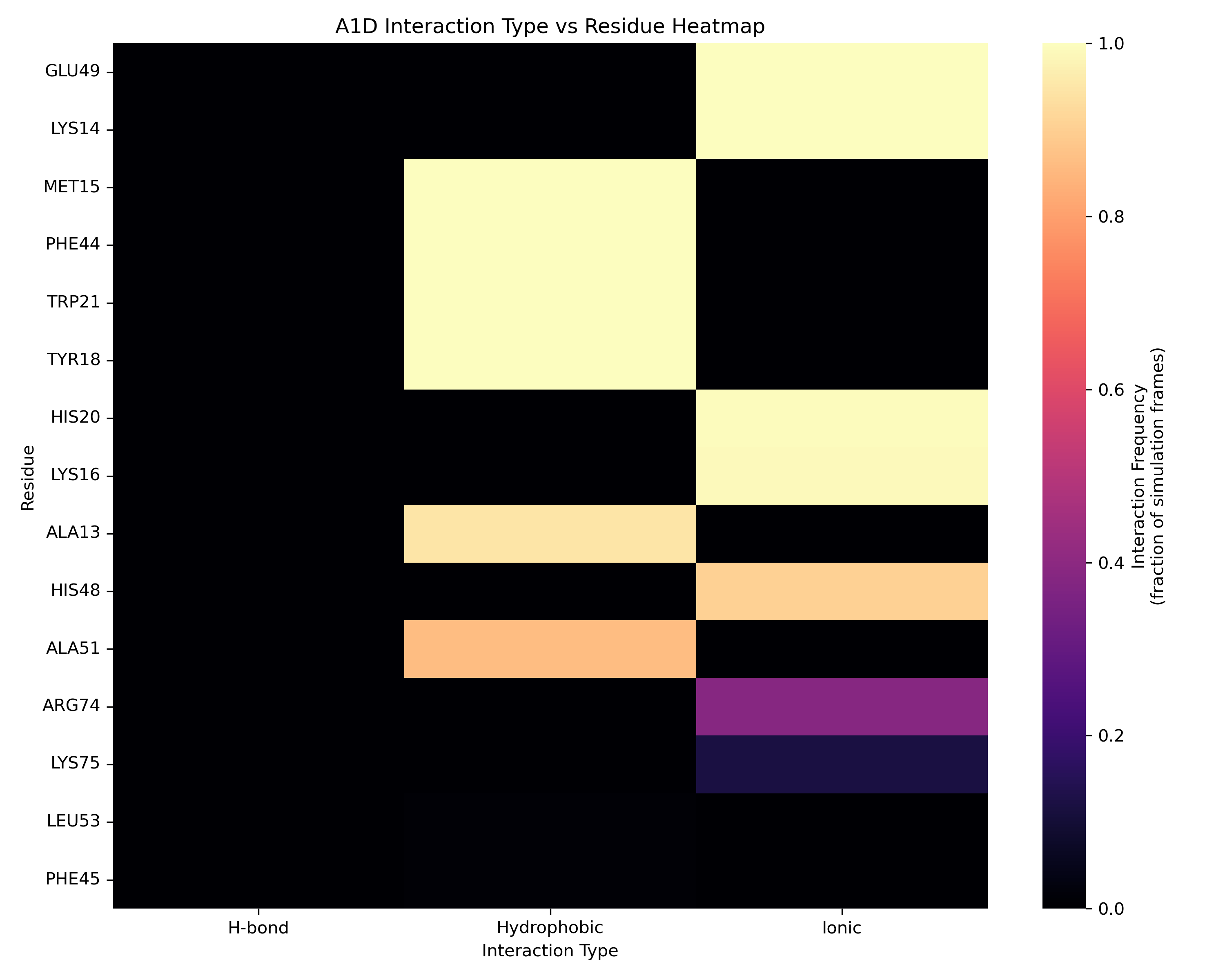
Summarizes how interaction types and residues distribute through time.
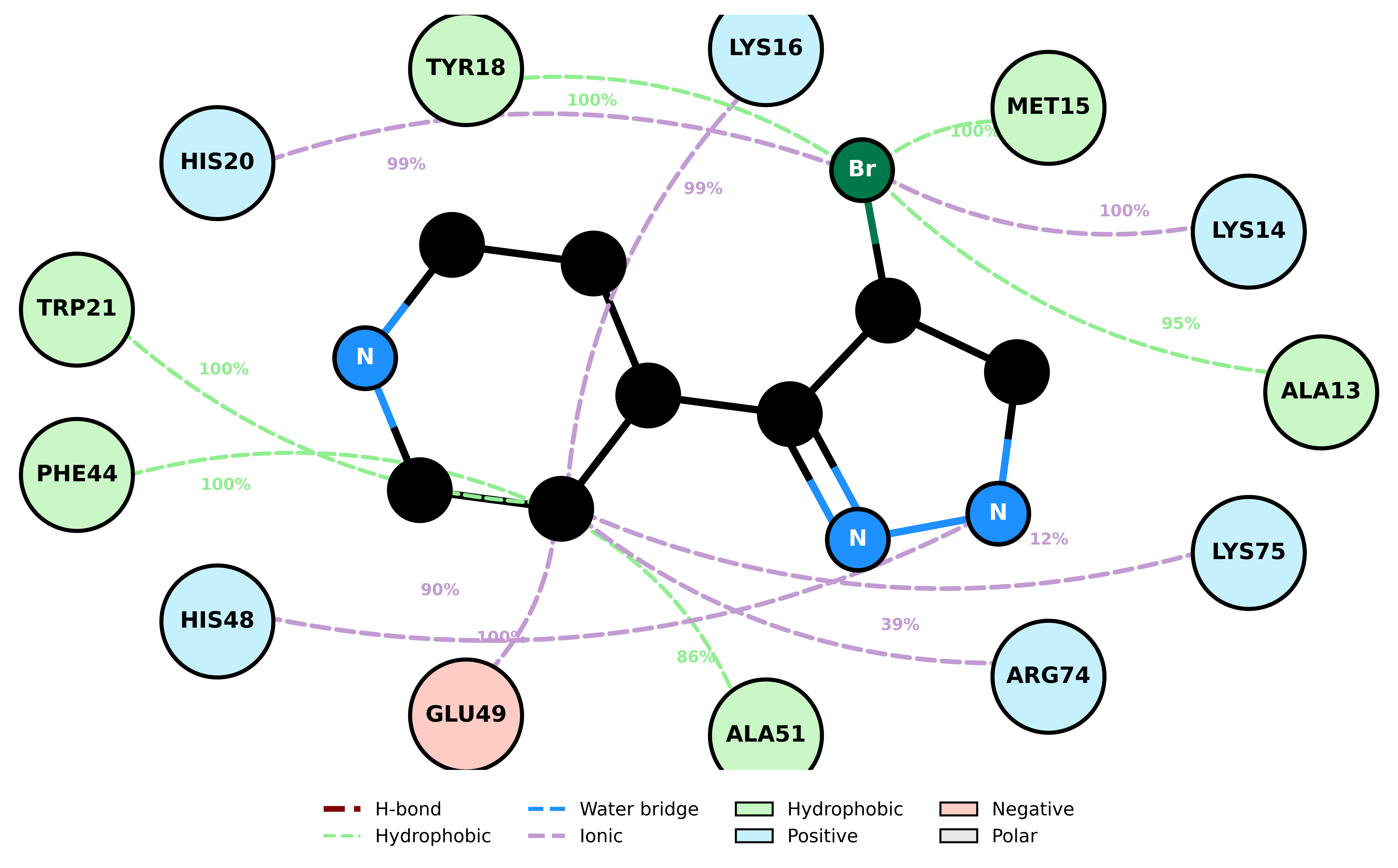
Converts contact tables into a ligand-centered network view for interpretation and reporting.